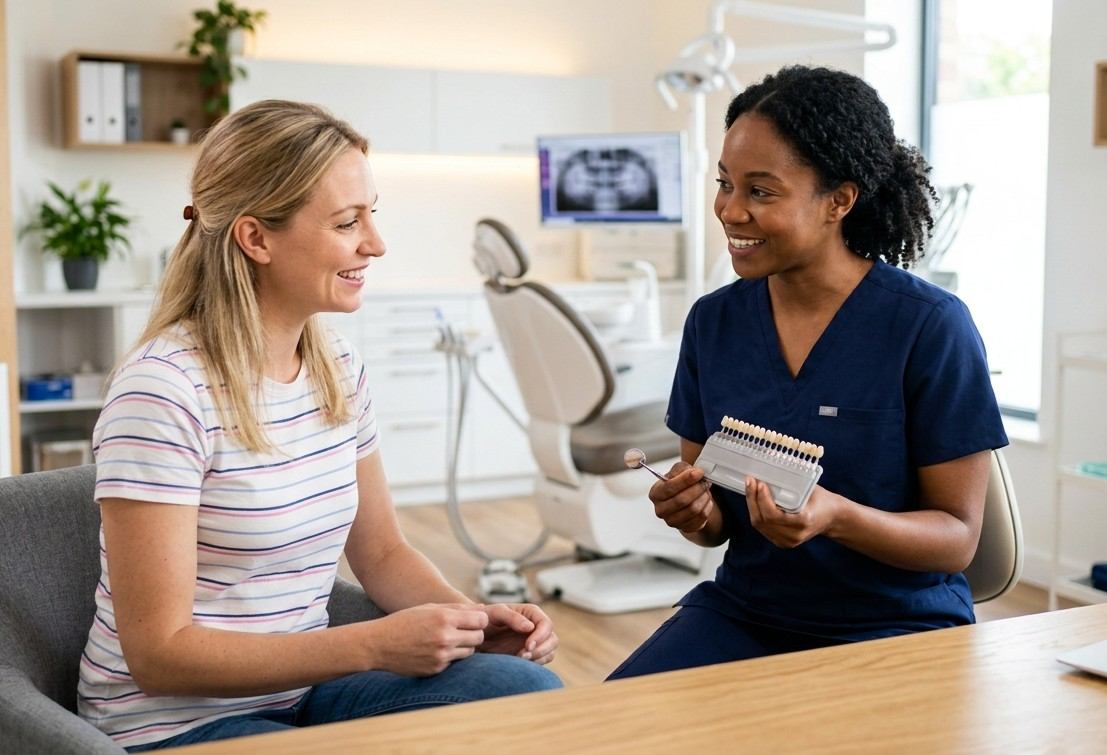
Who Is a Good Candidate for Teeth Whitening?
Quick Answer: The best candidates for teeth whitening are adults with healthy enamel and surface stains from food, drinks, or tobacco. Children under 16, pregnant or nursing patients, and anyone with untreated cavities or gum disease are generally advised to wait, and whitening won't change the color of crowns, veneers, or fillings.
Whitening treatments get marketed as a near-universal fix, pick a product, follow the steps, get a brighter smile. The reality is a bit more specific. Whether whitening actually works for you depends on a handful of factors that have nothing to do with which product or strength you choose.
Who Whitening Tends to Work Well For
At Boca Dental, we typically see the best results in adults with healthy tooth enamel and stains that come from everyday habits, like coffee, tea, red wine, or tobacco. These surface stains sit on top of the enamel and respond predictably to both in-office and at-home treatments. Patients in this group usually see visible results within one to two treatments, sometimes noticeable within days of the first session. Genetics also play a role here, patients with naturally lighter enamel tend to see more dramatic shifts than those with darker or denser enamel starting out, though both groups typically still see meaningful improvement.
Who Should Hold Off or Skip It
A few groups are generally advised to avoid whitening, at least for now:
- Children under 16, since their tooth pulp is still enlarged and more sensitive to bleaching agents
- Pregnant or nursing patients, since the effects of whitening chemicals in these situations haven't been thoroughly studied
- Anyone with active cavities, exposed roots, or untreated gum disease, since whitening gel can irritate already compromised areas
- Patients with extremely thin or worn enamel, who often experience more sensitivity for less visible improvement
If any of these apply to you, it's worth talking to a dentist before starting treatment rather than working through it on your own. Searching for a dentist near me and booking a quick evaluation first can save you from spending money on a treatment that isn't right for your situation yet.
Restorations Don't Respond to Whitening
Crowns, veneers, bonding, and fillings are made of materials that don't bleach the way natural enamel does. If you have visible dental work on your front teeth, whitening the surrounding natural teeth can leave the restoration looking noticeably different in color afterward. This is one of the most common reasons patients end up disappointed with results they got from a drugstore kit without checking first.
Getting a Straight Answer Before You Start
The only way to know for certain if whitening will work for your specific situation is a quick exam. At Boca Dental, that means checking for restorations, active decay, and enamel condition before recommending any treatment, rather than assuming a one-size-fits-all approach will work. Anyone searching for a dentist in Elizabeth, NJ who will give a direct answer about candidacy, not just sell a whitening package, should expect exactly that kind of evaluation.
For patients who are good candidates, the next step is usually a conversation about in-office whitening versus a take-home option, based on how fast you want results and how much sensitivity you're comfortable managing. That conversation looks the same whether you're coming from Elizabeth, NJ 07201, 07202, 07206, or 07208, or driving in from Hillside, Linden, or Roselle. Schedule a consultation online or call 908-490-7200 to find out where you stand.
Frequently Asked Questions
1. Can I get teeth whitening if I have sensitive teeth?
Not necessarily. Sensitivity can often be managed with a lower concentration treatment, a desensitizing gel beforehand, or a slower at-home approach instead of a single strong in-office session. It's worth mentioning your sensitivity during a consultation so treatment can be adjusted.
2. Can whitening make yellow teeth as white as naturally white teeth?
It depends on the cause of the yellowing. Surface staining from food, drinks, or tobacco often lightens significantly. Yellowing that comes from enamel thinning or genetics tends to respond less dramatically, since there's less to actually lighten.
3. Does age affect whether whitening will work?
Age itself isn't usually the deciding factor for adults, enamel condition and stain type matter more. That said, older patients sometimes have more internal, non-surface discoloration that responds less to whitening than external staining does.
4. Are there cases where teeth won't respond to whitening?
Yes, in certain cases. Teeth affected by tetracycline staining, severe fluorosis, or significant internal trauma may show little to no change with whitening, regardless of treatment strength or duration.
5. What happens if I whiten my teeth and I'm not actually a good candidate?
At best, you may see minimal results for the money spent. At worst, patients with untreated decay or gum issues can experience increased sensitivity or irritation. This is exactly why a quick check beforehand matters.